
One Person. One Decision. The Whole Thing Changes.
The Myth of the Inevitable
Most people look back at a pivotal moment in history and assume it was going to happen one way or another. The revolution was coming. Civil rights were inevitable. The Cold War had to end.
But that is not how it looked to the people living through it.
In 1775, the British were the most powerful military force on earth. The colonists were a loose collection of farmers, tradespeople, and merchants with no standing army, no navy, and no guarantee of French support. The idea that they could win was not obvious. It was, by any reasonable calculation, unlikely.
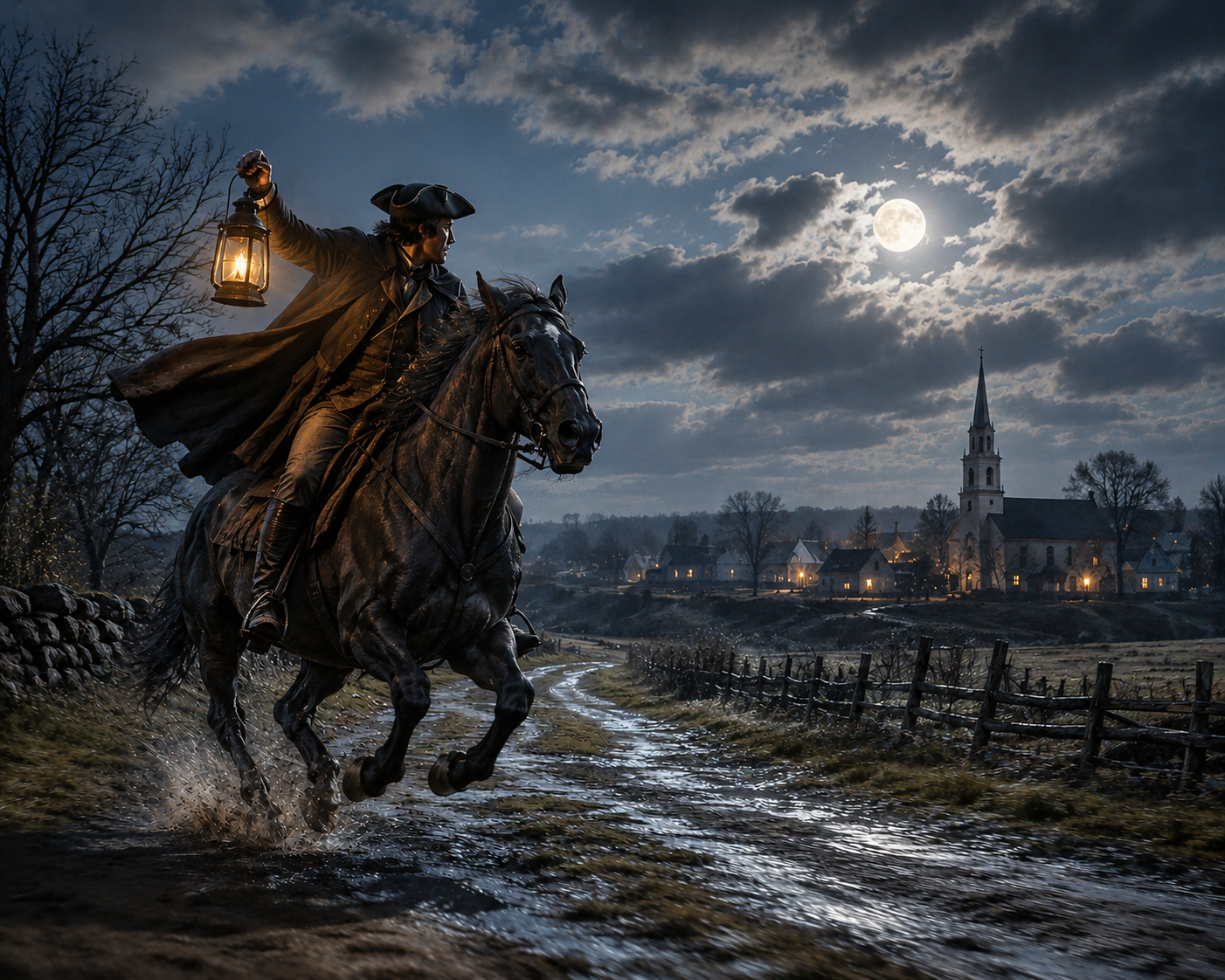
What changed the calculation was not a force of nature. It was a man on a horse in the middle of the night.
Paul Revere did not win the Revolutionary War by himself. But without his ride on the night of April 18, 1775 — without that one act of personal decision, personal risk, and personal courage — the militias at Lexington and Concord would not have been ready. The “shot heard round the world” requires someone to have loaded the musket in time. Revere loaded it.
One person. One decision. The whole thing changes.
 Personal Agency Is Not a Personality Trait. It’s a Choice.
 Personal Agency Is Not a Personality Trait. It’s a Choice.
Here is the part that most people misunderstand about figures like Revere, or Abraham Lincoln, or Rosa Parks, or Ronald Reagan.
We look at them after the fact and assume they were extraordinary people — built differently, wired for greatness, destined for the history books. We turn them into statues and hang their portraits on walls because it is more comfortable than sitting with the actual lesson, which is this:
They were not special. They made a choice.
Rosa Parks was a 42-year-old seamstress with aching feet who had worked a long day and decided she was done being told where to sit. She did not wake up that morning knowing she would change the country. She made a decision — in a single moment, on a city bus in Montgomery, Alabama — and everything that followed flowed from that choice.
Abraham Lincoln lost more elections than he won before he ever reached the presidency. He was not born to lead a nation through its worst crisis. He chose, repeatedly and at great personal cost, to keep going when every reasonable person around him was looking for a way out. The Emancipation Proclamation was not the product of destiny. It was the product of a man who kept making the harder choice when the easier one was right in front of him.
Ronald Reagan was told he was too old, too ideological, too Hollywood to win a national election. He chose not to believe that. He chose to run anyway, to make the argument anyway, to stand for something specific when the safer path was to soften it. He won in a landslide — not because history selected him, but because he refused to wait for permission.
Personal agency is not a gift. It is not a temperament or a talent or something you either have or don’t. It is a decision you make — or don’t make. And every person in this article made it when making it was hard.

The Geometry of Decisive Moments
History does not compress evenly. Most of it is ordinary — years and decades where things move slowly and any individual’s choices feel negligible. But folded inside that ordinary time are hinge moments: brief windows where the decisions of a small number of people determine the path of everything that follows.
The American founding was one of those moments. The men who signed the Declaration of Independence were not a majority of the population — they were 56 individuals who chose to put their names on a document that branded them traitors to the Crown. Benjamin Franklin, who knew exactly how dangerous it was, reportedly quipped that they must all hang together or they would all hang separately. They signed anyway.
The Civil War’s outcome was not inevitable either. By the summer of 1864, Lincoln was losing. The war was dragging into its fourth year, casualties were catastrophic, and a peace-at-any-cost Democrat named George McClellan was ahead in the polls. Lincoln himself believed he would lose the election. He was making plans to cooperate with the incoming administration on ending the war — which would have meant ending it without abolishing slavery.
Then Atlanta fell to Sherman in September. The political calculus shifted overnight. Lincoln won. The Union was preserved and slavery abolished — not by the sweep of history, but by the specific timing of a specific military campaign executed by specific men who refused to stop pushing.
Hinge moments don’t announce themselves. They look, from the inside, like just another hard day.

What This Has to Do with Arizona
You may be wondering what Paul Revere and Abraham Lincoln have to do with your daily life in Arizona.
Everything.
But first, a fact that most people don’t think about until it’s too late: 2026 is a midterm election year. There is no presidential race on the ballot. And because of that, millions of people who voted in 2024 will sit this one out — not because they stopped caring, but because midterms feel less urgent. Less exciting. Less like the one that matters.
Here is what that assumption costs.
Midterm elections determine who controls the U.S. House of Representatives. They determine Arizona’s congressional seats, statewide offices, legislative majorities, and the judges and school board members who shape daily life in every community across the state. The decisions made by the people elected in 2026 will be in effect long after the next presidential race is decided. Midterms are not the warm-up act. They are the main event — and they are routinely decided by the people who bothered to show up when everyone else stayed home.
In Arizona, the margins are already razor-thin without the dropoff. In 2022 — the last midterm — the race for Arizona governor was decided by fewer than 17,000 votes out of nearly 2.6 million cast. In 2020, Arizona’s presidential race was decided by 10,457 votes. More people than that live in Flagstaff.
Arizona has fifteen counties — from Maricopa, home to Phoenix and nearly 4 million people, to Greenlee in the southeast with a population under 10,000. Every county contributes to the statewide total. And in every county, there are registered Republican voters who will not cast a ballot in 2026 unless someone makes the case that their vote matters just as much this year as it did in 2024.
It does. In some ways, it matters more — because fewer people will vote, which means each vote carries more weight.
That gap between Republicans who are registered and Republicans who actually show up in a midterm year is where Arizona elections are won and lost. It is not a mystery. It is not a money problem. It is a people problem. And the only solution is individuals who decide their personal action is worth taking.
That is where you come in.

The 5% That Decides Everything
“Too big to rig” is not a slogan. It is a strategy.
When the margin of victory is under 2%, a 5% increase in Republican turnout does not just win a race — it makes the outcome undeniable. It restructures the map. It removes the margin of doubt entirely.
Arizona’s congressional seats, statewide offices, courts, and schools are all decided by margins that 5% can swing — not theoretically, but mathematically. Five percent sounds modest. In Arizona, it is a wave large enough to secure Republican leadership up and down the ballot and shore up the U.S. House heading into 2026 and beyond.
That five percent does not come from money or messaging. It comes from individuals who decided their action mattered — and then acted.

The People Who Already Know This
A direct, personal conversation with a neighbor — someone who lives nearby and cares about the same streets — increases the probability that a registered voter actually votes. The effect compounds. Across thousands of conversations, it becomes the margin.
Arizona’s political future will not be decided by the biggest donors or the loudest voices on social media. It will be decided by people who show up on a Saturday morning, make three phone calls, or give two hours on a weeknight to make sure a neighbor knows their vote is needed.
History does not require heroes. It requires people who show up.

“I’m Too Busy” Is Not a Reason. It’s a Choice.
Rosa Parks had a full-time job, a husband, and a life. She didn’t have a free afternoon blocked off for changing history. She made a decision on a bus ride home from work.
Paul Revere was a silversmith with a business to run and a family to feed. His midnight ride was not on the calendar. He went anyway.
The question is never whether you have time. The question is whether you have decided that this is worth some of it.
Now consider what “some of it” actually means in practical terms. Making three phone calls to remind a neighbor to vote takes less time than watching a single episode of television. Attending one volunteer training on a Saturday morning takes less time than a round of golf. Writing a postcard to a low-turnout voter in your county takes ten minutes and a stamp. Forwarding a voter registration link to five people in your contacts takes thirty seconds.
None of this requires you to quit your job, rearrange your family, or become a full-time political operative. The entire premise of personal agency is that ordinary people doing ordinary things in small amounts of time, multiplied across thousands of people, produce extraordinary outcomes.
Paul Revere rode for two hours. Rosa Parks sat still on a bus. Lincoln wrote a proclamation. Reagan gave a speech.
Small actions. Chosen deliberately. At the right moment.
This is that moment. And the actions available to you right now are smaller and easier than anything any of them did. The only thing required is the decision to take one.
Each of them faced a moment where acting was inconvenient, uncertain, and easy to postpone. Each of them acted anyway. And the conditions of American life were permanently changed by that choice.
Arizona is not 1775. But it is a hinge moment. The margin is thin, the stakes are real, and the outcome will be determined by the people who decide their personal agency is worth exercising.
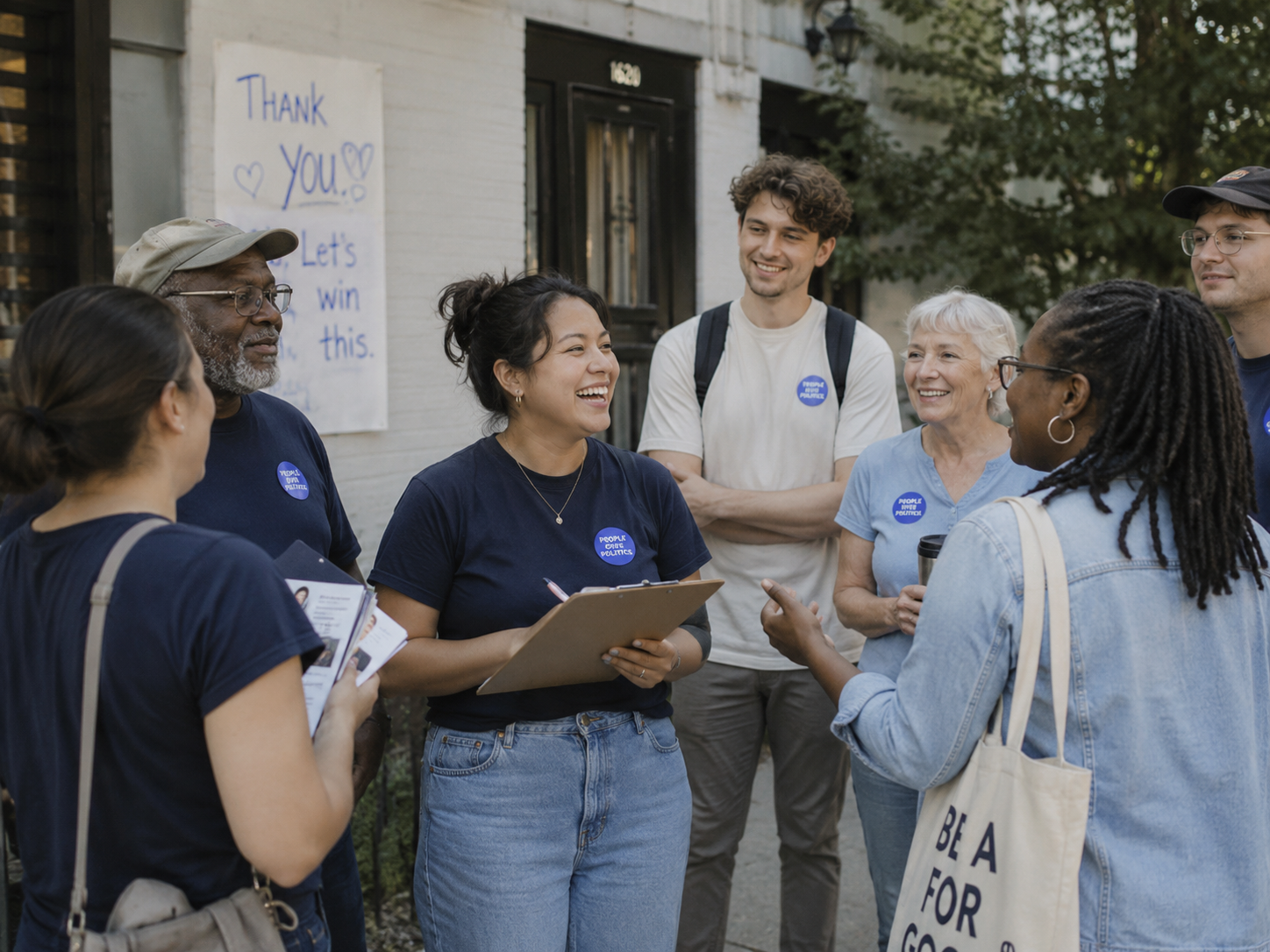
At the end of this article, you will find specific examples and concrete ways you can make a difference — actions matched to the time you have, the neighborhood you live in, and the skills you already bring. Start there.
The question is simple. It is the same question it has always been.
Are you in the room — or are you letting someone else decide?
 How You Can Make a Difference